How to Talk to Your Partner About Intimate Wellness Devices
By Luxuria Wellness Team · July 2026 · 6 min read
How to Talk to Your Partner About Intimate Wellness Devices
By Luxuria Wellness Team | July 2026 | 7 min read
If the thought of saying "hey, I want us to try a vibrator" makes your stomach tighten, you're not alone.
According to a survey of 2,000 adults, 67% have wanted to introduce intimate wellness devices into their relationship but didn't know how to bring it up. The fear of making a partner feel inadequate — or being judged — is real.
We spoke with Dr. Marcus Williams, a licensed couples therapist who has helped hundreds of couples navigate this conversation. His advice forms the backbone of this guide.
First: Let Go of the Guilt
Dr. Williams puts it simply:
"Intimate wellness devices are tools, not replacements. A hammer doesn't replace a carpenter — it makes the carpenter more effective. The same logic applies here."
Here's a stat that helps: couples who use intimate wellness devices together report 23% higher relationship satisfaction than those who don't, according to a 2025 study in the Journal of Sex Research. This isn't about fixing something broken. It's about adding to something that already works.
The 5-Step Conversation Framework
Dr. Williams recommends what he calls the "Bridge Method" — five steps that build toward the ask, rather than dropping it all at once.
Step 1: Choose the Right Time
| Good Time | Bad Time |
|---|---|
| After a relaxed dinner | Right after an argument |
| During a weekend morning | Five minutes before work |
| On a walk or drive (less eye pressure) | In bed, in the dark |
| When you're both in a good mood | When you're about to have sex |
The worst time to bring it up is in the bedroom, right before intimacy. "That immediately links the device to performance anxiety," Dr. Williams explains. "Talk about it over coffee on a Saturday. Make it normal."
Step 2: Lead with Curiosity, Not a Solution
Wrong way:
"I think we should get a vibrator."
Right way:
"I've been reading about how some couples use devices together to explore new things. Have you ever thought about that?"
The difference: one is a declaration. The other is an invitation.
Step 3: Frame It Around "Us," Not "Me"
| What You Mean | What They Might Hear | Better Framing |
|---|---|---|
| "I want to try this" | "You're not enough" | "I read about couples discovering new things together" |
| "This looks fun" | "Our sex life is boring" | "What if we tried something new as a team?" |
| "My friend recommended this" | "You're being compared" | "I found this article about how devices help couples communicate better about intimacy" |
Step 4: Address the Elephant in the Room
Dr. Williams says there are three fears almost every partner has, whether they say them or not:
- "I'll be replaced." — Reassure them: "This isn't about replacing you. It's about us experiencing something new together."
- "I don't know how to use it." — Normalize: "I don't either. We'd figure it out together."
- "This means our sex life is broken." — Reframe: "This means we're curious enough about each other to keep exploring."
Step 5: Make It a Joint Decision
Don't buy something and surprise them. Browse together. Let them have input on what feels comfortable. When your partner helps choose the device, they go from "your thing" to "our thing."
Choosing the Right First Device as a Couple
Not every device is couple-friendly. Here's what to look for:
| Feature | Why It Matters | Luxuria Example |
|---|---|---|
| Compact & unintimidating | You don't want something that looks clinical | Bloom ($40) |
| Remote control | One partner can control it while the other receives | Link ($55) |
| Quiet | No awkward buzzing sounds killing the mood | Lily (38 dB) |
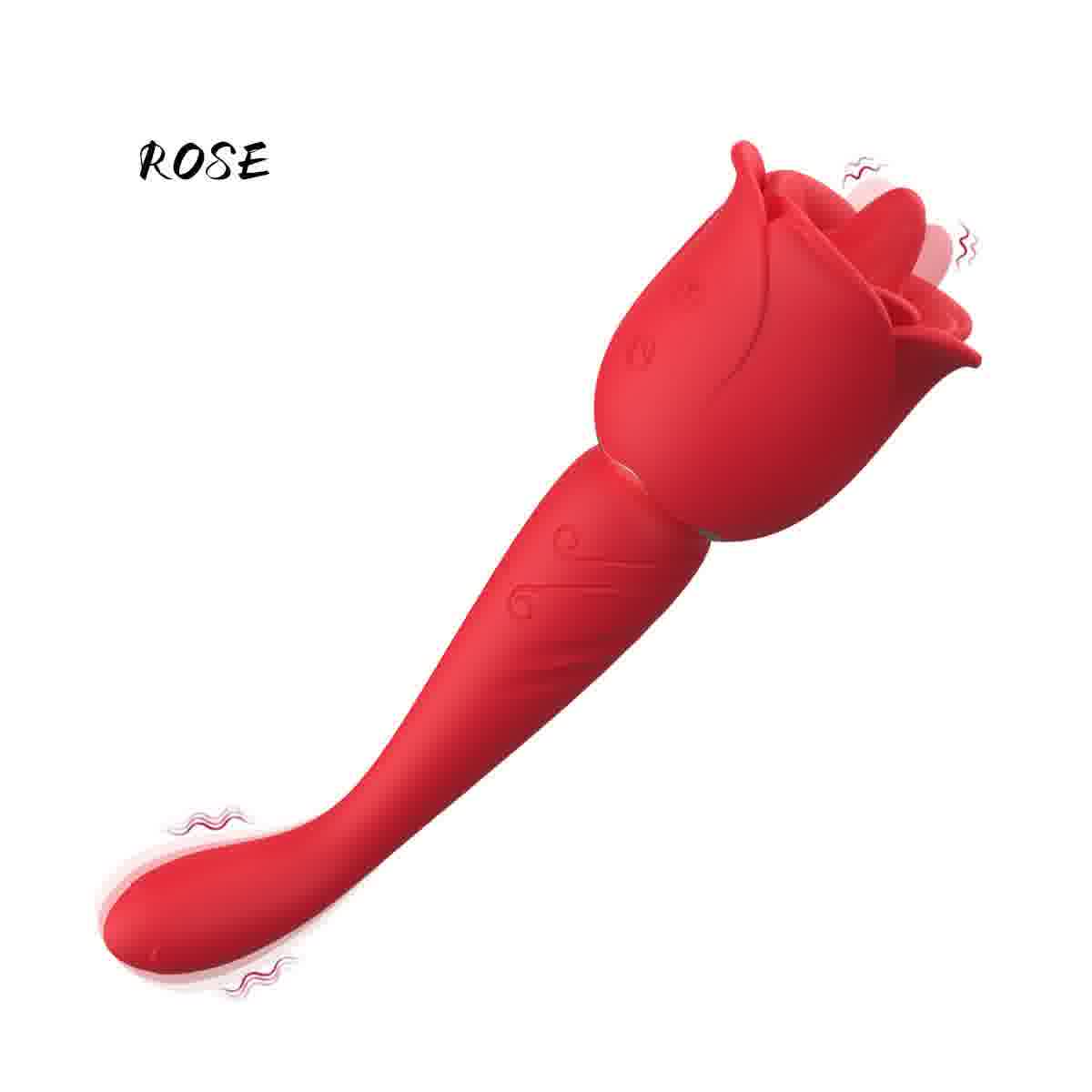
| Versatile | Works for both partners, not just one | Bloom (dual-ended) |
| Body-safe materials | Medical-grade silicone is non-negotiable | All Luxuria devices |
Our Top Pick for Couples: Bloom ($40)
The dual-ended rose design is unintimidating, quiet, and versatile enough for both partners. It doesn't look like what most people imagine when they think of "sex toys." At $40, it's a low-stakes way to try something new without pressure.
Best for Long-Distance: Link ($55)
App-controlled with unlimited range. One partner wears it, the other controls it from anywhere in the world. Dr. Williams calls devices like these "the closest thing to physical presence technology currently allows."
What Not to Do
| Don't | Why |
|---|---|
| Don't spring it on them during sex | Creates immediate performance pressure |
| Don't joke about it to deflect discomfort | Makes it seem like the topic is shameful |
| Don't buy the biggest, most expensive one | Intimidating for a first shared experience |
| Don't make it about "fixing" something | Implies your current intimacy is broken |
| Don't give up if the first conversation is awkward | New topics take time to normalize |
| Don't use it without talking about it first | Trust first, toys second |
What If They Say No?
Dr. Williams emphasizes that a "no" isn't necessarily permanent:
- Don't react defensively. "Okay, I hear you. Thanks for being honest."
- Ask gentle questions. "Can you tell me what makes you uncomfortable about it?"
- Give it time. Sometimes the first conversation just plants a seed.
- Revisit in a month. "I was reading another article about couples and wellness. Would you be open to talking about it again?"
"The couples who make it," Dr. Williams says, "are the ones who treat this conversation as a dialogue, not a sales pitch."
Real Couples, Real Stories
Lena and Tom, together 3 years: "I was terrified to bring it up. When I finally did, over pancakes on a Sunday morning, he just said 'whatever makes you happy.' I had built it up in my head for months. It was never a big deal to him — it was a big deal to me." — They chose Bloom.
Marcus and James, together 1 year: "We picked out Link together online. The fact that we could use it when Marcus travels for work was the selling point. It took the pressure off the 'sex toy' label and made it about staying connected."
The Bottom Line
Intimate wellness devices don't create communication — they reveal existing communication. If you can talk about this, you can talk about anything. And the couples who talk about everything? They're the ones who last.
Browse couple-friendly devices → Shop Luxuria
Dr. Marcus Williams, LMFT, is a licensed couples therapist and sexual health educator. His recommendations are based on clinical practice and were not paid for by Luxuria.
Tags: couples vibrator guide, how to talk to partner about sex toys, intimate wellness for couples, relationship intimacy tips, best couples toy 2026, introducing toys to relationship, couples communication intimacy