Sensory-Friendly Picks for Easily Overwhelmed Nervous Systems
By Luxuria Wellness Team · July 2026 · 6 min read
Sensory-Friendly Picks for Easily Overwhelmed Nervous Systems
By Luxuria Wellness Team | July 2026 | 6 min read
Not everyone wants the most intense toy on the shelf. For some people — anyone with sensory sensitivities, neurodivergent folks, people recovering from overstimulation, or just people whose nervous system hits "too much" faster than average — the standard advice of "more power, more patterns, more intensity" is exactly backwards. What they need is less, calmer, more controllable.
The toy market is mostly built for the "more is more" customer, which leaves a real gap. Here's how to fill it if your nervous system doesn't want to be blasted.
What "Sensory-Friendly" Actually Means Here
A sensory-friendly intimate device isn't a different category of product. It's a set of features that matter more for easily overwhelmed nervous systems:
- Low starting intensity. The lowest setting should be genuinely low, not "low for a marketing bullet point." Many toys' lowest setting is already too much for a sensitive person.
- Fine control, not 10 jumps. You want gradual steps or a smooth dial, not 10 preset levels where 1 is "fine" and 2 is "suddenly a lot."
- Rumbly, not buzzy. Buzzy (high-frequency) stimulation is sharper and more likely to overstimulate and numb. Rumbly (low-frequency) is gentler and more sustainable.
- Quiet. Noise is sensory input. A loud toy adds to the overwhelm. Lower dB = calmer nervous system.
- Predictable patterns. Random or rapidly cycling patterns can feel jarring. Steady, predictable vibration is easier to process.
- Simple controls. Fumbling with tiny buttons mid-use is its own stressor. Intuitive, physical controls beat buried app menus for in-the-moment use.
The Features That Matter, Ranked
| Feature | Why it matters for sensory sensitivity |
|---|---|
| Low minimum intensity | The lowest setting must actually be low |
| Gradual intensity steps | Smooth ramp, not big jumps |
| Rumbly motor | Less numbing/overstimulation than buzzy |
| Low noise (under 45 dB) | Noise is sensory load |
| Simple, tactile controls | No fumbling, no surprise pattern changes |
| Steady patterns | Predictability = calmer processing |
The Picks
Quietest and gentlest: Lily
| Feature | Detail |
|---|---|
| Type | Compact tongue stimulator |
| Noise | 38 dB — the quietest in the lineup |
| Character | Gentle, focused |
| Price | $49 |
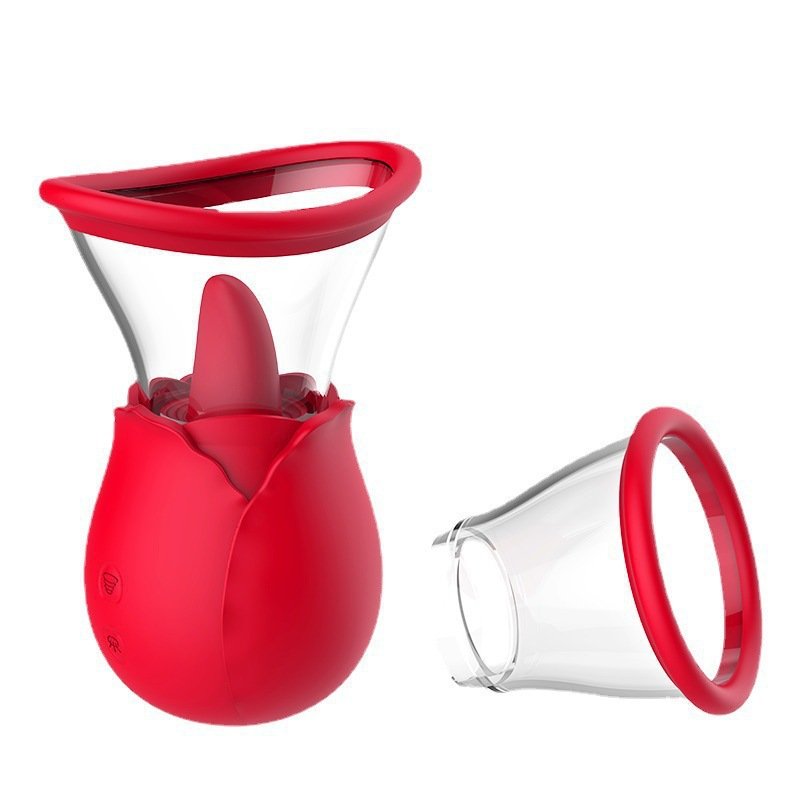
Lily is the sensory-friendly default. 38 dB is near-silent — you're not adding noise load on top of sensation load. The compact size and focused stimulation mean you're not getting broad, overwhelming input; it's targeted and manageable. For someone whose nervous system needs calm, this is the starting point.
Lowest-intensity entry: Dot
| Feature | Detail |
|---|---|
| Type | Bullet |
| Character | Small, focused, modest power |
| Price | $29 |
Dot is the cheapest way to test whether vibration works for you at all, and its modest output is a feature for sensitive people, not a bug. A bullet delivers focused stimulation without the broad, full-area intensity of a wand. If even Dot is too much, suction (which has no direct friction) might be the better path.
No-contact option: Breeze (suction)
| Feature | Detail |
|---|---|
| Type | Suction / air pulse |
| Character | No direct friction, gentler on sensitive tissue |
| Price | $35 |
For people who find direct vibration overstimulating — numbing, sharp, "too much" — suction is often the answer. It stimulates through air pulse without direct contact on the most sensitive tissue, which can be much easier for an overwhelmed nervous system to process. Breeze is the gentle, cheap entry into that category.
The Approach, Not Just the Device
The right device only does half the work. The other half is how you use it, and for sensory sensitivities, approach matters as much as hardware.
- Start way lower than you think. The mistake is beginning at a "reasonable" setting and going up. For a sensitive nervous system, start at the absolute minimum and only go up if you actively want more. There's no medal for intensity.
- Predictable over varied. Steady vibration is easier to process than cycling patterns. If patterns feel jarring, ignore them — most people don't actually need them.
- Shorter sessions. Sensory load accumulates. A 5-minute session that stays pleasant beats a 20-minute session that tips into overwhelm. Stop while it's still good.
- Control the environment. Dim light, quiet room, comfortable temperature. Sensory input is additive — a loud toy in a bright room with the TV on is more overwhelming than the same toy in calm conditions, even if the toy is the same.
- Notice the "too much" early. The window between "this is good" and "this is too much" can be narrow for sensitive people. Learning to clock the early signs of overwhelm and back off — rather than pushing through — is the skill that makes this work long-term.
- No goal pressure. Performance pressure is its own sensory/emotional load. If the goal is "feel good for a bit" rather than "achieve a specific outcome," the whole thing gets easier to process.
If You're Neurodivergent
A note for autistic and ADHD folks, since this comes up: sensory processing differences are real and common, and the standard toy advice often doesn't account for them. Some specifics that help:
- Texture matters more. The feel of the material against skin can be a make-or-break sensory input. Medical-grade silicone's velvety texture is generally well-tolerated; harder or stickier materials less so.
- Routines can be a feature, not a limitation. If a specific device, setting, and routine works reliably, there's nothing wrong with using it every time. Consistency isn't a failure of imagination.
- Overstimulation is real and not a character flaw. If you tip into overwhelm, stopping is correct. Pushing through doesn't build tolerance; it builds aversion.
- Executive function and setup. If getting the device, charging it, setting up the environment feels like a lot of steps, that's real friction. Keep it accessible and charged so the barrier to use is low.
The Bottom Line
- Less is more for sensitive nervous systems. Low minimum intensity, gradual steps, rumbly not buzzy.
- Lily ($49) is the quiet-and-gentle default — 38 dB, focused, calm.
- Dot ($29) is the low-intensity bullet entry; Breeze ($35) is the no-contact suction option if direct vibration overstimulates.
- Approach matters as much as device. Start at minimum, predictable patterns, short sessions, control the environment.
- Stop at "too much," early. The skill is noticing overwhelm and backing off, not pushing through.
There's nothing wrong with needing gentler. The market caters to "more" because that's what most people ask for, but most isn't everyone. If your nervous system needs calm, predictable, and low, that's a solvable problem — and the right device plus the right approach makes it genuinely comfortable.
Shopping for something gentler? See Lily, Dot, and Breeze →
Tags: sensory friendly vibrator, quiet gentle vibrator, vibrator for sensory sensitivity, low intensity vibrator, vibrator for autism adhd, gentle sex toy overstimulation